Pre‑K – Kindergarten
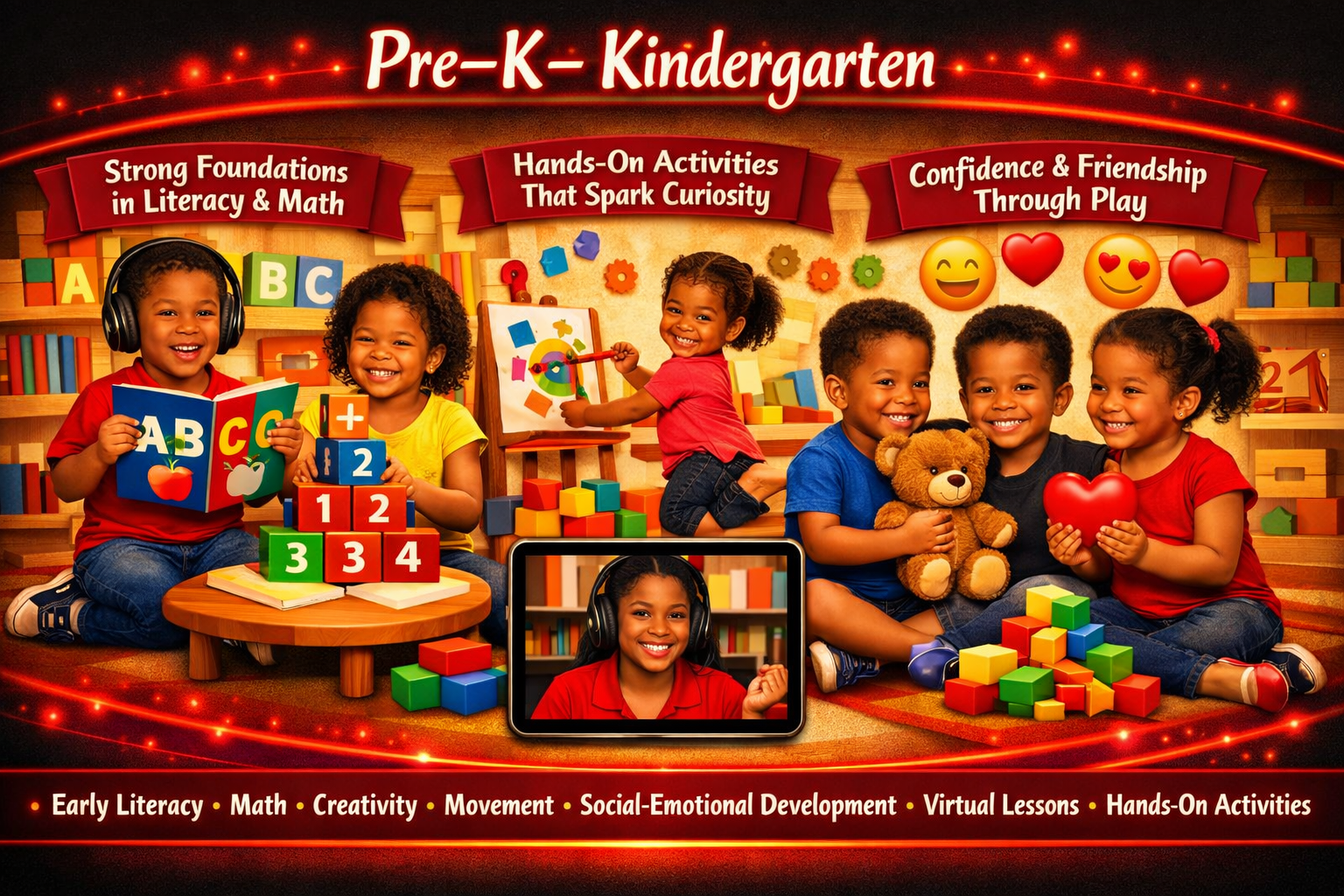
A joyful early learning experience that builds strong foundations in literacy, math, creativity, and social‑emotional development — all through engaging virtual lessons and hands‑on activities.
Early Learning That Feels Like Play
Our Pre‑K and Kindergarten program blends interactive virtual lessons with hands‑on learning at home. Children explore early literacy, numbers, movement, creativity, and social‑emotional skills in a warm, supportive environment.
Every child receives personalized attention, developmentally appropriate activities, and a learning experience designed to spark curiosity and confidence.
What Children Learn
Early Literacy
Letters, sounds, vocabulary, storytelling, and pre‑reading skills taught through songs and books.
Early Math
Counting, shapes, patterns, sorting, and number sense introduced through playful learning.
Creativity & Art
Drawing, painting, building, and imaginative play that encourage expression and confidence.
Movement & Motor Skills
Dance, stretching, balance, coordination, and physical play to support healthy development.
Social‑Emotional Learning
Sharing, taking turns, expressing feelings, building friendships, and developing empathy.
Science & Discovery
Exploring nature, simple experiments, sensory play, and early STEM concepts.
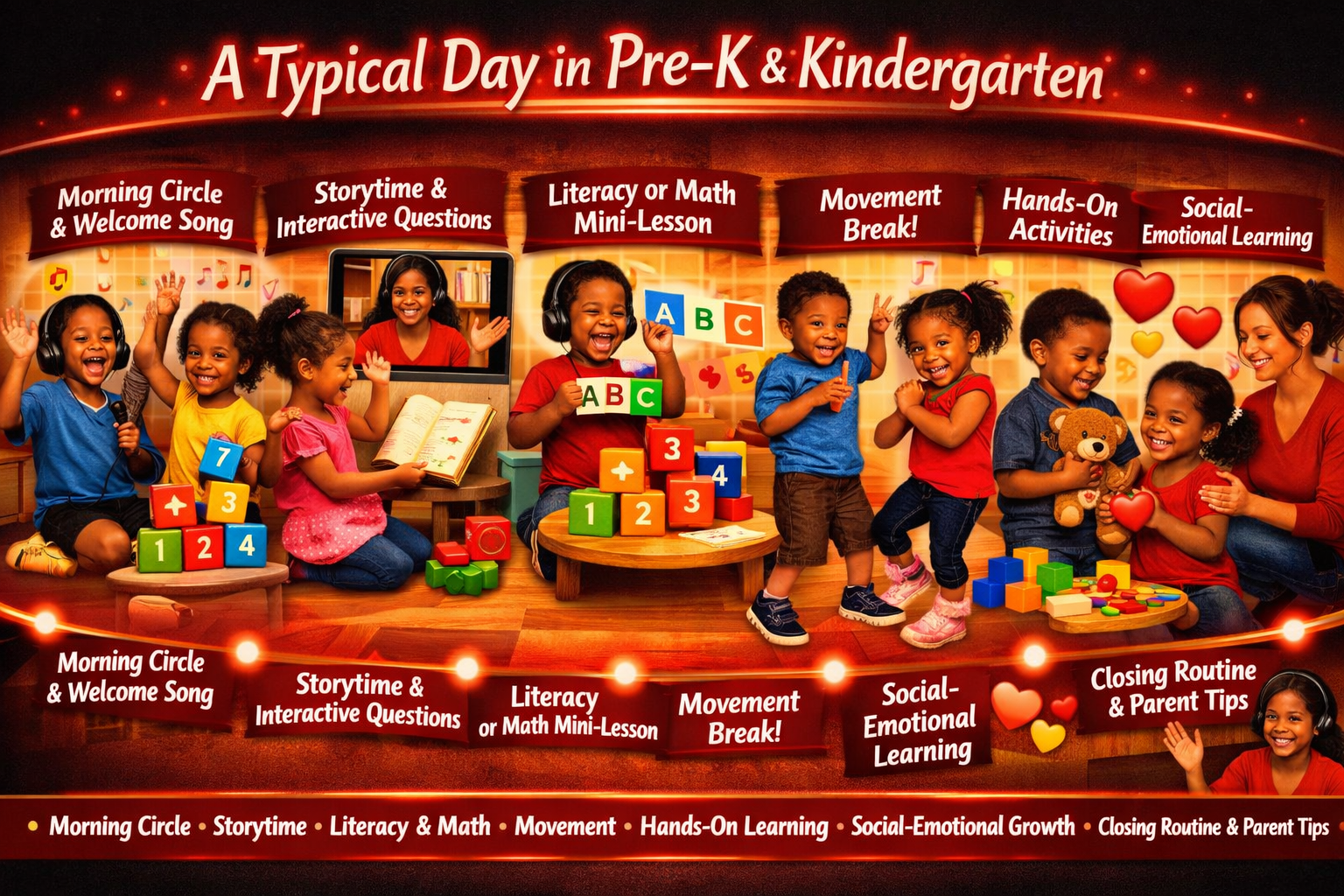
A Typical Day in Pre‑K & Kindergarten
- ✔ Morning circle time & welcome song
- ✔ Storytime with interactive questions
- ✔ Literacy or math mini‑lesson
- ✔ Movement break (dance, stretching, yoga)
- ✔ Hands‑on activity using simple home materials
- ✔ Social‑emotional learning moment
- ✔ Closing routine & parent tips
Why Families Love Pre‑K & Kindergarten at ZAPZ Prep
- ✔ Safe, structured learning from home
- ✔ Designed for short attention spans
- ✔ Builds early literacy & math foundations
- ✔ Encourages creativity and imagination
- ✔ Supports social‑emotional development
- ✔ Perfect for young learners not ready for in‑person school
Explore the K–12 Pathway
Continue to 1st – 2nd Grade or return to the full K–12 overview.
Back to K–12 Overview